Map the perimeter to the work
- Where will materials and lifts cross? Align gate openings with the shortest, safest route to laydown and interior access.
- Can the line run outside trailer swing paths? Corners near dock aprons need extra offset to maintain sightlines.
- Will the fence sit on asphalt, compacted base, or loamy soil that softens after storms? site-stability factors and bracing needs change by surface.
Local conditions that affect stability
- Intense heat and humidity can loosen some temporary base connections over long shifts. Regular checks during extended runs are common site practice.
- After quick, heavy rain, saturated soils reduce panel stability. Wider bases or additional site-stability factors can help resist movement on soft ground.
- High‑velocity logistics areas benefit from clear barricade cues to separate pedestrians from forklifts and yard trucks.
Choose by task and exposure
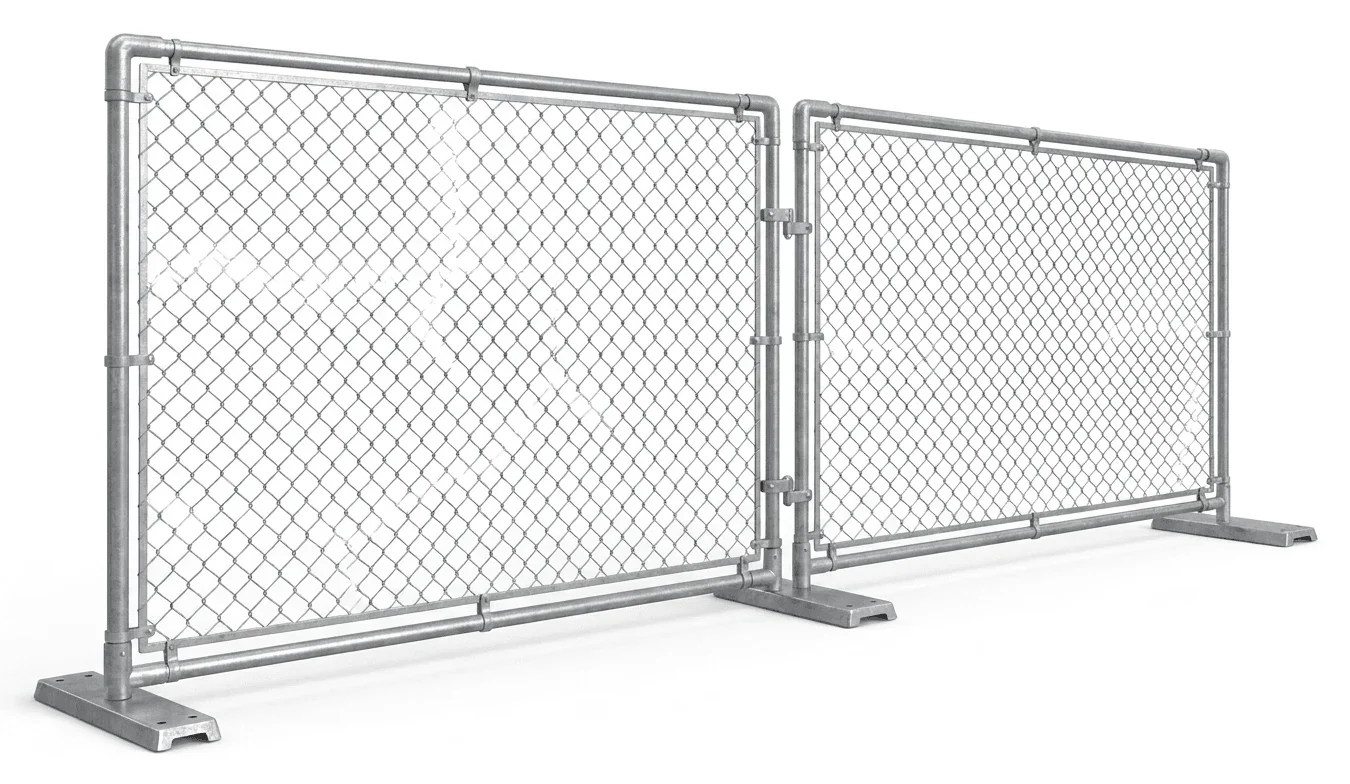
- Panels vs. barricades: solid fence lines suit perimeter control; barricades guide foot traffic at entries and staging.
- Gate needs: width for scissor lifts, boom lifts, and telehandlers; confirm turning radii and overhead clearance.
- Visibility: mesh and signage help in busy yards; reflective elements matter for night operations under light towers.
Integrating with lift work
- Indoor build zones often pair controlled entries with electric scissor lifts and vertical mast lifts.
- Exterior work on uneven ground may involve rough‑terrain scissor lifts or boom lifts crossing through gated openings sized to the largest unit.
Notes on wind and drainage
Actual conditions, the selected product’s instructions, and site procedures govern. In open lots, account for wind exposure and avoid routing fence lines through low areas where standing water undermines bases. Keep light‑tower cabling and generator placement outside egress points.