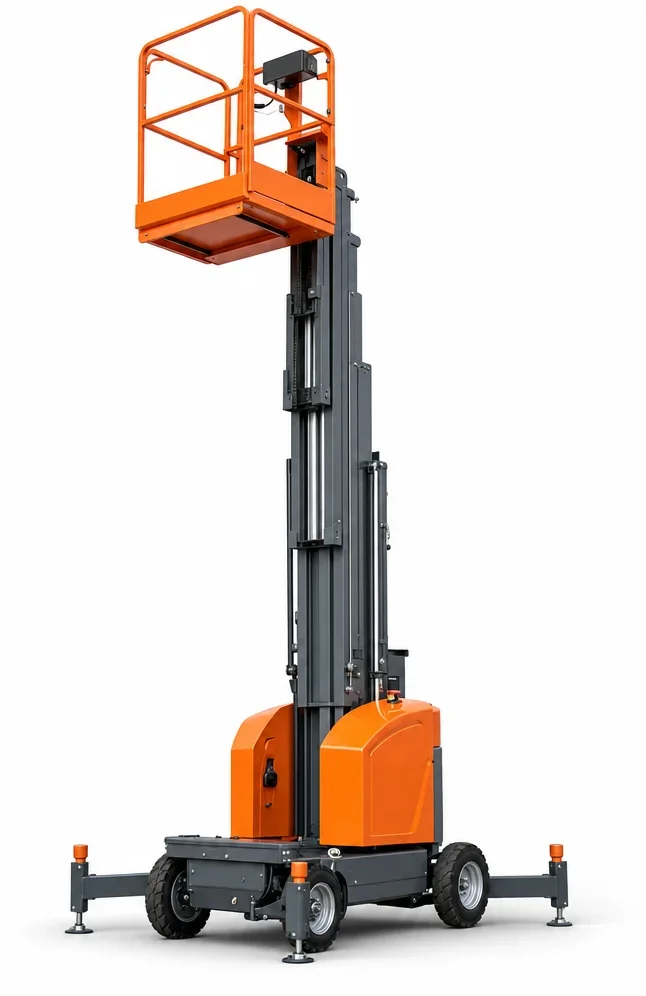
Where vertical masts excel
These units are built for tight geometry—inventory aisles, equipment rooms, and narrow service corridors. In regional cold‑storage and high‑velocity logistics buildings, short approach distances and sensitive floors favor compact footprints and non‑marking tires.
Plan around: - Narrowest doorway and corridor widths along the route - Floor load limits on mezzanines and near cooler thresholds - Required working height under sprinklers, conduit trays, and sensor arrays
Power and the regional climate
Electric drive is standard indoors, but McAllen’s heat and humidity reduce battery efficiency in non‑conditioned spaces. Charging near hot dock aprons lengthens turnaround. For tasks shuttling between chilled vestibules and warmer bays, expect runtime to vary with temperature swings.
Floor conditions and turning space
Polished concrete can become slick with condensation near cooler doors during humid spells. Tight 90‑degree turns at rack ends call for small chassis and precise steering. If the aisle width approaches the machine’s spec limit, a vertical mast often fits where even compact scissors struggle.
Height and outreach needs
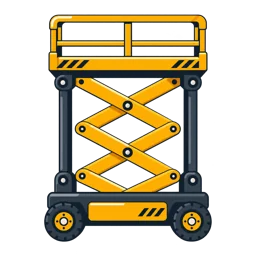
Vertical masts provide straight vertical elevation with minimal outreach. If the task requires reaching over conveyors or above canopies, consider /articulating-boom-lift-rental/ or /electric-scissor-lift-rental/ for larger platforms. For simple lamp swaps, sensor installs, and signage inside narrow lanes, the mast platform’s small footprint speeds placement.
Related categories
- For rough exterior approaches, see /rough-terrain-scissor-lift-rental/
- For broader platforms on slab, see /electric-scissor-lift-rental/
- Compare other access options at /aerial-lift-rental/
Actual conditions, the selected unit’s instructions, and site procedures govern final suitability.